3rd National Sweden SKA Science Day

Europe/Stockholm
Pärlan (Campus Albano Hus 1)

Pärlan

Campus Albano Hus 1

Albanovägen 28 Stockholm
Description

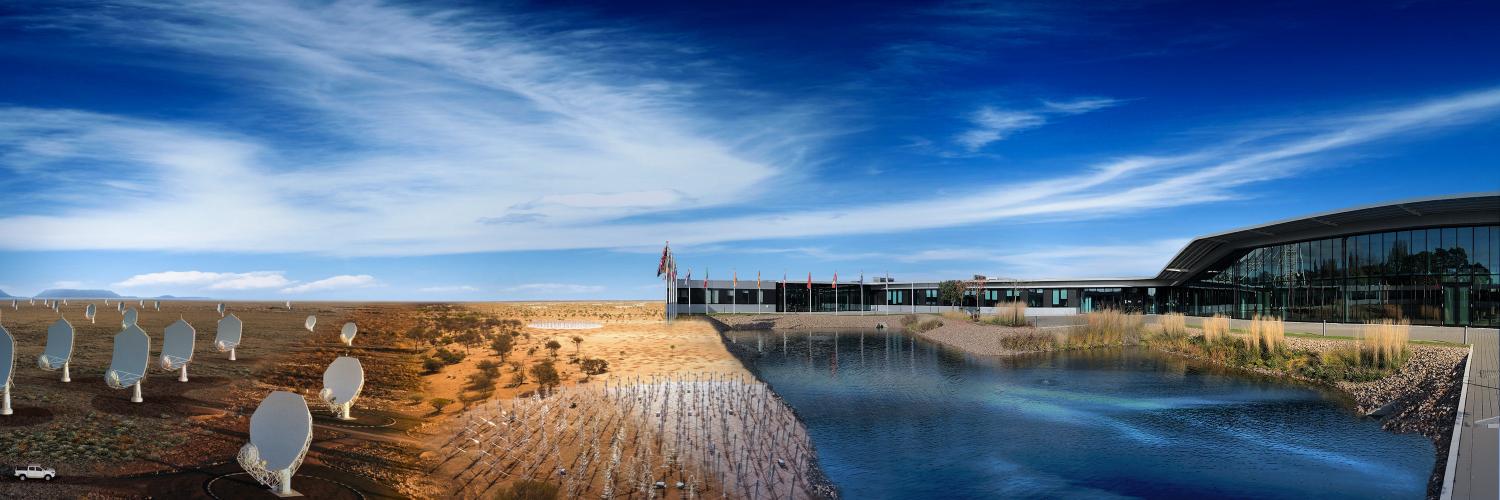
Ska_landscape_day
Credit: SKA Observatory

We are pleased to invite you to participate to the 3rd Sweden SKA Days hosted by Stockholm University: a two-day meeting about Swedish science and the SKA.  The goal of the Sweden SKA Days are to bring together researchers from across Sweden and abroad, working on SKA-related science, technology, and algorithm development. 

Abstract deadline: extended to 9 January 2026

Registration deadline: 14 January 2026

Invited speakers:

  • Michele Bianco (ETH Zurich)
  • Shari Breen (Head of Science Operations, SKAO)
  • Greta Guidi (Institut de Planetologie et d'Astrophysique de Grenoble)
  • Jens Jasche (Stockholm University)
  • Antonino Marasco (INAF-Osservatorio Astronomico di Padova)
  • Laurence Perrault-Levasseur (Université de Montréal)
  • Laura Spitler (Max Planck Institute for Radio Astronomy, Bonn)
  • Carmen Toribio (Chalmers University of Technology)
  • Stuart Wittley (Director of Programmes, SKAO)
  • Philippe Zarka (Observatoire de Paris)

With SKA Low and SKA Mid undergoing commissioning activities in 2026, and science verification starting in 2027, the SKA era is nearly upon us.  At the same time, the international SKA Regional Center Network (SRCNet) is developing the compute resources and data services to support SKA science activities.  The data volumes expected from the SKA telescopes will be vast, and new tools and algorithms are being developed to leverage the output from upcoming observations.

Specifically this third edition of the Sweden SKA Days aims to:

  • Update the scientific community on SKAO developments and SKA activities in Sweden including participation in the Science Data Challenges, and ongoing development of the Sweden SRC node.
  • Share results from SKA precursors and pathfinders, theoretical/simulation studies, and related work from complementary astronomical facilities (e.g. ALMA, Euclid, JWST, 4MOST, etc). Contributors are encouraged to present their work in a synergistic and/or prospective manner with regards to the SKA.
  • Explore the potential for applying Machine Learning/AI techniques in providing insight and analysis to large-scale data and answering scientific questions from the SKA.
  • Encourage scientific collaborations among groups interested in answering questions with SKA precursors/pathfinders and the next generation of SKA radio surveys.

The scientific motivation for building the SKA spans from cosmology and the early Universe, through galaxy evolution, to stellar astrophysics and planet formation.  SKA science is motivated by fundamental physics of gravity and magnetism, multi-discipliary fields such as astrochemistry, and will record events occurring on the timescales of Gyr to sub-milliseconds.  This broad range of science areas are reflected in the SKA Science Working Groups.

We welcome international contributions, and especially encourage participation from our colleagues in other Nordic countries across all SKA science cases.  We particularly encourage early career researchers to submit abstracts and to attend: the future of SKA science will be yours!

The meeting will include both invited and contributed talks, time for discussions, and hands-on sessions (TBA).  

Participants are expected to follow SKAO Code of conduct for meetings and events.

Past related meetings:
* 2nd National SKA Science Days Sweden, 2024
* 1st National SKA Science Day Sweden, 2023
The SKA Key Science Workshop #1, 2015

Participants
  • Wednesday 4 February
    • Registration and Welcome Remarks
      • 1
        Welcome remarks
    • Session 1
      • 2
        SKAO Construction Update

        Keynote Lecture

        Speaker: Stuart Whittley (SKAO)
      • 3
        Science with the SKA is nearly here!

        Keynote Lecture

        Speaker: Shari Breen (SKAO)
      • 4
        Chromatic instrumental polarimetry and SKA Data Challenge 4
        Speaker: Tobia Carozzi (chalmers.se)
      • 5
        Towards direction dependent full polarization imaging
        Speaker: Victor Gustafsson (University of Hamburg)
      • 6
        SKA-MID receiver and synhronization development
        Speaker: Harri Hellgren (Qamcom Research and Technology)
    • Lunch
    • Session 2
      • 7
        Transient Science with the SKAO
        Speaker: Laura Spitler (Max Planck Institute for Radio Astronomy)
      • 8
        Detecting Structural Changes of the Jet Base at Event-Horizon Scales in M60*
        Speaker: Jun Yang
      • 9
        The nuclear dyanmics of nearby extreme galaxies
        Speaker: Boy Lankhaar (University of Oslo)
      • 10
        Coronal emission from radio-quiet AGNs at high redshift
        Speaker: Santiago Del Palacio (chalmers.se)
    • Coffee/Break
    • Session 3
      • 11
        Enabling SKA science in the SKA Regional Centre Network – towards Science Verification
        Speaker: Maria Carmen Toribio Perez (chalmers.se)
      • 12
        Revealing the HI Environment of a Compact Obscured Nucleus in the Zone of Avoidance
        Speaker: Julia Healy (University of Manchester)
      • 13
        SKA et al. as new tools to study the evolution of compact obscured nuclei throughout the history of the Universe
        Speaker: Sabine König (chalmers.se)
      • 14
        Towards an AI Center for Science at Stockholm University
        Speaker: Jens Jasche (Stockholm University)
      • 15
        Sharing a baseline: Globally coordinated schools visits to radio observatories
        Speaker: Robert Cumming (Onsala Space Observatory, Chalmers)
    • Conference Dinner at Hasselbacken
  • Thursday 5 February
    • Session 4
      • 16
        Probing the Epoch of Reionisation: Progress and Perspectives from the SKA Data Challenge
        Speaker: Michele Bianco (ETH Zurich)
      • 17
        Physical interpretation of the IGM parameters of the 21-cm power spectrum from cosmic reionization
        Speaker: Ivelin Georgiev (Stockholm Univeristy)
      • 18
        The impact of Lyman Werner feedback on the epoch of reionization
        Speaker: Viktor Köhlin Lövfors (su.se)
      • 19
        Mapping the Growth of Ionized Bubbles: SKA’s Window into Cosmic Reionization
        Speaker: Sambit Kumar Giri (su.se)
      • 20
        Low-frequency radio emissions from stellar and exoplanetary systems
        Speaker: Philippe Zarka (Observatoire de Paris - PSL - CNRS, France)
    • Coffee/Break
    • Session 5
      • 21
        TBA
        Speaker: Laurence Perreault-Levasseur (Université de Montréal and Mila)
      • 22
        Revealing Cosmic Structure Formation Through Machine Learning on Archival and SKA-Era Surveys
        Speaker: Tom Bakx (Chalmers University of Technology)
      • 23
        Protoplanetary disks and the onset of planet formation with the SKAO
        Speaker: Greta Guidi (IPAG Grenoble)
      • 24
        Astromoprh – a machine learning approach to morphological analysis
        Speaker: Per Bjerkeli (Chalmers University of Technology)
      • 25
        A Multi-Wavelength Analysis of AGN and Star-Forming Cluster Galaxies
        Speaker: Sara Lundqvist (Luleå University of Technology)
    • Lunch
    • Session 6
      • 26
        Observing HI in and around simulated galaxies
        Speaker: Antonino Marasco (INAF - Padova Observatory)
      • 27
        Searching for dual AGN in galaxies using multi-wavelength observations
        Speaker: Vicente Horacio Salinas Froemel (chalmers.se)
      • 28
        Discussion panel: Machine Learning and AI in the SKA era
    • Coffee/Break
    • Session 7
      • 29
        Hooks, Lines, and Sinkers: How AGN Feedback and Cosmic Ray-Transport Shape the Far-Infrared Radio Correlation of Galaxies
        Speaker: Sam Ponnada (Caltech and Chalmers)
      • 30
        A new method for observationally constraining cosmic ray diffusion in nearby galaxies
        Speaker: Alice Knutas (Chalmers University of Technology)
      • 31
        Where the Stars Stop: The Edge of Local Group Galaxy M33
        Speaker: Nushkia Chamba (chalmers.se)
    • Closing remarks